India’s scrap import market plays a crucial role in supporting its manufacturing, recycling, and infrastructure sectors, providing a cost-effective and sustainable alternative to virgin raw materials.
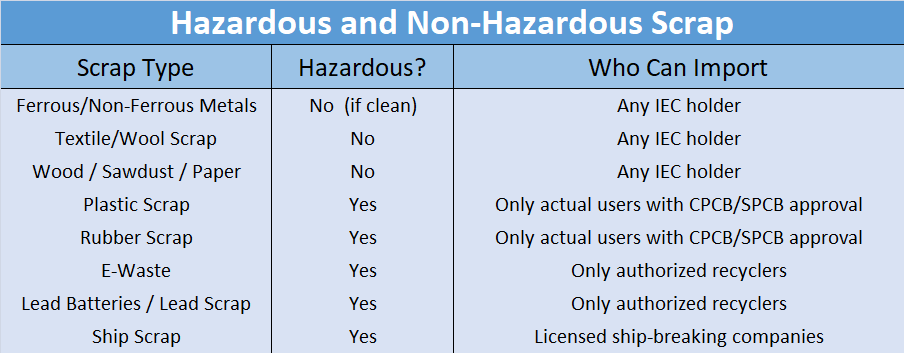
While ferrous and non-ferrous metal scraps, textiles, paper, and wood offer opportunities for a wide range of importers, hazardous scraps like plastics, rubber, e-waste, and lead-bearing materials are tightly regulated to ensure environmental and human safety.
Compliance with PSIC certification, CPCB and SPCB approvals, and other statutory permissions is essential for smooth customs clearance and responsible recycling.
By understanding the types of scrap, their hazards, and regulatory requirements, importers can leverage India’s growing recycling and manufacturing ecosystem while contributing to a more sustainable and circular economy.